What Are The Differences Between Porcelain And Zirconia Crowns?
Zirconia And Porcelain Crowns: Which One Is The Best Option For You?
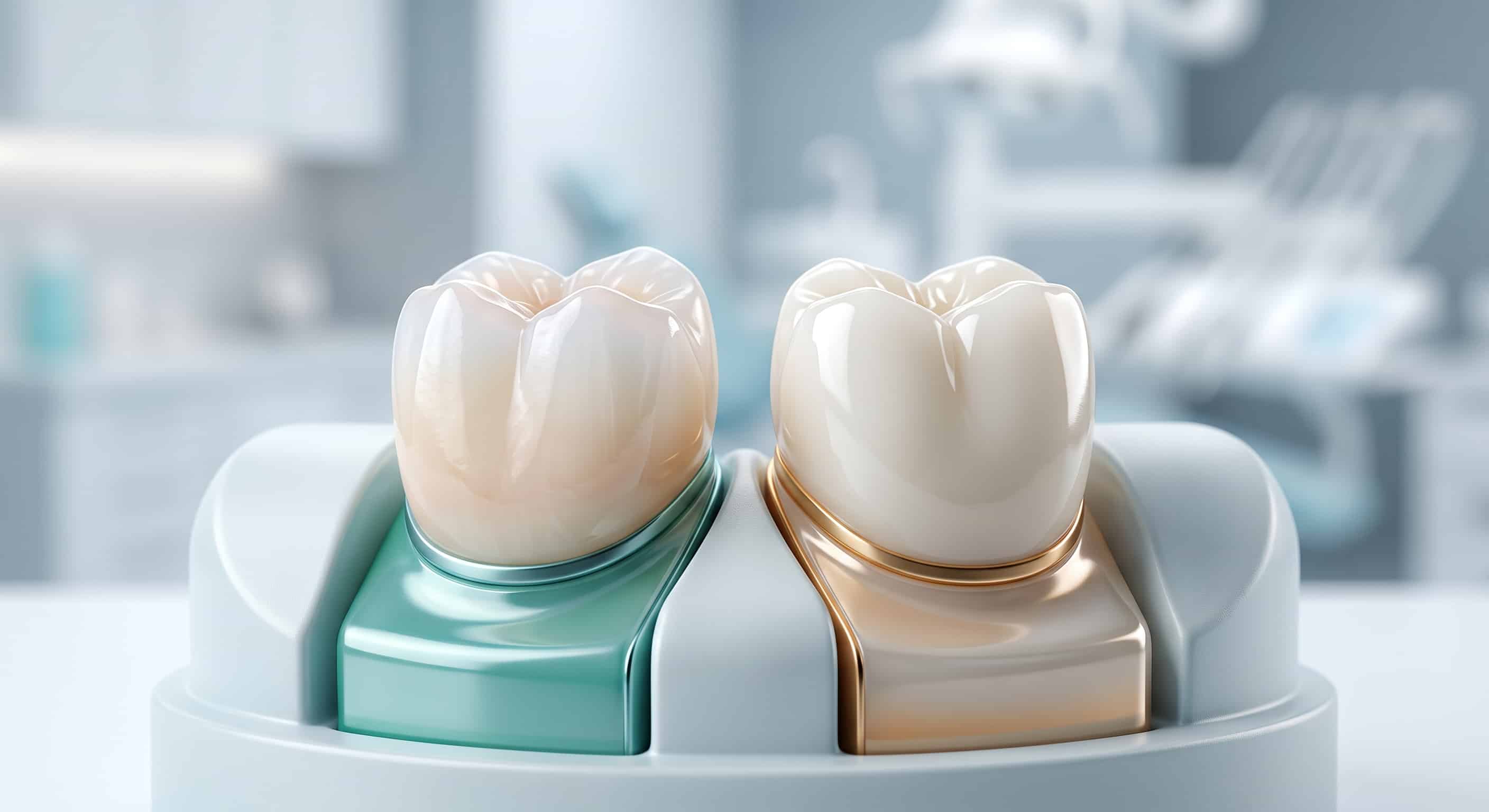
If your dentist just told you that you need a crown, you are probably being asked to choose between porcelain and zirconia without much sense of what actually separates them. Here is the short version, then the detail.
The quick version:
- Zirconia is a ceramic made from zirconium dioxide. Porcelain is a glass ceramic. Both are metal-free and both are made to look like a tooth.
- In laboratory testing zirconia is the stronger of the two by a wide margin, which is why it comes up for molars and for people who grind their teeth.
- Porcelain generally has the edge on looking lifelike, which is why it shows up so often on front teeth.
- A difference that matters just as much: whether your crown is milled from one solid block or built as a core with a cosmetic layer baked over it.
- There is no single best material. The right answer depends on which tooth it is going on, how you bite, and what you want it to look like.
What Is A Dental Crown?
A dental crown is a cap that fits over the top of a damaged tooth. Your Gilbert dentist may recommend one when a tooth needs to be protected, covered, or reshaped and a filling is not enough to solve the problem. Those are much the same uses the American Dental Association describes. You can have one crown or several, depending on what your teeth need.
Crowns may be recommended when:
- You need an anchor for a dental bridge
- A tooth needs protection after a root canal
- The shape of a chipped or broken tooth needs changing
- An injury to a tooth needs covering
- A cavity has grown too large to fill with resin or amalgam
- An implant needs the visible tooth that sits on top of it, as with implant supported bridges and crowns
Patients like them because they ask for nothing beyond good brushing and flossing, they stay put instead of sliding the way dentures can, and they let you eat and talk normally.
Crowns can be made from metal, resin, or one of several ceramics. Two come up far more than the rest, so those are the two worth understanding properly.
Porcelain And Zirconia, Side By Side
Here is the honest comparison, with the caveat that every row below shifts depending on the specific tooth.
| Zirconia | Porcelain | |
|---|---|---|
| What it is | Zirconium dioxide, a ceramic oxide, stabilized with a small amount of yttrium oxide | A glass ceramic, sometimes used alone and sometimes fused to a metal base |
| Strength in lab testing | Much higher. Published figures for the strongest formulations run several times those of glass ceramics | Lower, though still well within what a normal bite asks of a crown |
| How lifelike it looks | Depends heavily on the formulation. The strongest zirconia is also the most opaque | Generally the more natural looking of the two, which is why it is a front-tooth favorite |
| Usual home | Molars, heavy bites, grinders | Front teeth and anywhere appearance leads the decision |
| Tooth structure removed | Often less than a porcelain-fused-to-metal crown needs, though this is decided case by case | More, particularly where a metal base sits under a porcelain layer |
“Dr. Peck is extraordinary! She is sweet, professional, gentle and is constantly asking if you are comfortable … My crown looks and feels fabulous! I had absolutely no issues with my temporary crown.”
Laurie Woodcock, Google review
All About Zirconia Dental Crowns
Zirconia is zirconium dioxide, a ceramic. It is not a metal, and it is not a silicate. A small amount of yttrium oxide gets added so the useful crystal structure stays stable at mouth temperature, which is the reason a zirconia crown holds up the way it does.
In the lab, zirconia tests far stronger than the glass ceramics used in conventional porcelain crowns. That strength is the main reason your Gilbert dentist may suggest it for a molar, or for a patient whose bite puts heavy force on one tooth. It resists chipping and staining well, and it does not discolor over time.
A crown can be monolithic, meaning it is milled from a single solid block, or it can be layered, meaning a strong core has cosmetic porcelain baked over the outside. Layered crowns look more lifelike but add a failure mode the solid ones do not have, because that outer porcelain can chip away while the core underneath stays perfectly intact. When two crowns are being compared, this is often the real difference, not the material name on the treatment plan.
Zirconia comes with a trade you should know about, because it is the part most articles skip. Zirconia is not one material. Formulations with more yttrium oxide look more translucent and more like a real tooth, but they test lower for strength, a tradeoff documented across the three zirconia grades used in dentistry. The formulations that test strongest are also the most opaque. So a zirconia crown can be built for looks or built for strength, and your dentist and the lab pick where on that scale your particular tooth should sit.
Part of where that strength comes from is worth knowing, because it is unusual. When a microscopic crack starts to spread through zirconia, the crystals around the tip of that crack change structure and grow slightly larger, which squeezes the crack and works against it spreading further. The material resists damage from the inside rather than simply being hard. It is not self-repairing and it is not unbreakable, but it does explain why zirconia holds up under forces that would chip a glass ceramic.
How the crown is finished matters too, and here the honest answer is more careful than most articles give you. A polished zirconia surface is consistently gentler on the tooth that bites against it than a glazed one, partly because a baked-on glaze wears away over time and leaves a rougher surface behind. But a clinical trial that measured real patients over a year found that both polished and glazed zirconia crowns wear the opposing tooth more than a natural tooth would. So zirconia is not as kind to the tooth it bites against as your own enamel is. What you can ask for is a properly polished crown, and re-polishing rather than roughness if it gets adjusted in the chair.
Will A Zirconia Crown Look Fake On A Front Tooth?
Not necessarily, but it depends on which zirconia is used. The high-strength formulations are noticeably opaque and can read flat next to natural enamel. The more translucent versions look far better and are made for exactly this situation. If the crown is going somewhere visible, ask your dentist directly which formulation they plan to use and why. You can also look at real cases in our smile gallery.
What About Porcelain Dental Crowns?
Porcelain crowns are the ones most people picture. They are built to restore a natural look, and your dentist will shade match the crown against your surrounding teeth so it does not announce itself when you smile. For a front tooth, that matching is usually what decides the case.
Ask which one you are being quoted, because they do not behave alike. Feldspathic porcelain is the most lifelike and the most fragile. Lithium disilicate, which you may hear called by the brand name e.max, is the modern high-strength glass ceramic and is what most people mean today by an all-porcelain crown. Porcelain fused to metal has a metal base under the porcelain, and if your gums recede over the years it can show a thin dark line at the gumline. That last one is a big reason metal-free crowns took over the front of the mouth.
Porcelain and porcelain-fused-to-metal crowns are commonly cited as lasting somewhere around ten to fifteen years, and plenty last longer with good care. Treat that as a typical range rather than a promise, because what a crown actually does over time has more to do with your habits than with the material.
The honest weakness of porcelain is that it can chip or fracture under heavy grinding and clenching. That is not a reason to rule it out. It is a reason to tell your dentist if you grind, because a night guard is often recommended for that regardless of which material you end up with.
Can A Porcelain Crown Be Repaired If It Chips?
Sometimes, depending on how big the chip is and where it sits. Small chips on a surface that does not carry much bite force can occasionally be smoothed or repaired in place. Larger fractures, or damage on a chewing surface, usually mean replacing the crown. Either way it is worth getting looked at quickly, because a rough edge can irritate your tongue and cheek and can leave the tooth underneath exposed. Call the office if you notice one.
Which Type Of Crown Is Best For Me?
There is no material that wins every case, and any article that tells you otherwise is selling something. Material choice is a decision you make with your dentist based on which tooth it is, how your bite loads that tooth, what you want it to look like, and what you are comfortable spending.
As a rough starting point:
- A back molar that takes heavy force: strength usually leads, which points toward zirconia.
- A front tooth in your smile line: appearance usually leads, which points toward porcelain or a translucent zirconia.
- You grind or clench: say so early. It changes the recommendation and it probably adds a night guard.
- You want the least tooth removed: raise it, because prep depth varies by crown design.
Questions worth bringing to your consultation:
- Which material are you recommending for this specific tooth, and what made you choose it?
- Will this be a solid crown or one with a cosmetic layer over a core?
- How much of my natural tooth will need to come off?
- What does my insurance cover, and what will I owe?
- What happens if it chips or comes loose later?
How Much Does A Crown Cost, And Will Insurance Cover It?
Cost varies by material, by how much work the tooth needs first, and by your plan, so any number quoted online is close to meaningless for your situation. Most dental plans cover a share of a crown placed for a structural reason rather than a purely cosmetic one, though waiting periods and annual maximums often apply. Our front desk will check your benefits and give you a written estimate before you commit. We also offer financing and a savings plan.
“She cleaned and instructed and set out a plan to clean out two teeth to make crowns for them. I must say I have never had a better experience with a dentist in my life!!”
Ted Washburne, Google review
Not sure which one fits your tooth? Dr. Peck will look at the tooth itself, how your bite loads it, and what you want it to look like, then tell you which way she would go and why. Call (480) 503-5467 to schedule a consultation.
What Actually Shortens A Crown’s Life
Patients tend to focus on picking the right material and then stop thinking about it. In practice, how long a crown lasts depends far more on oral hygiene, bite forces, and keeping up with regular dental exams than on which ceramic it was made from. A well-chosen crown in a neglected mouth does worse than an ordinary crown in a well-cared-for one.
It also helps to know what actually goes wrong, because it is not what most people expect. When the American Dental Association surveyed dentists through its Clinical Evaluators Panel in 2021 and asked how zirconia compared with older metal ceramic crowns, the complication they reported most often was not the crown breaking. It was the crown coming unglued. Debonding came up for 52 percent of them, opposing tooth wear for 31 percent, and actual fracture of the crown for 23 percent. So the common failure is usually a recementing visit, not a shattered crown, and a crown that suddenly feels loose or lifts slightly when you chew is worth a call rather than a wait.
The things that actually work against a crown:
- Grinding and clenching. The single biggest mechanical threat, and the easiest to do something about.
- Skipping cleanings. The crown itself cannot decay, but the natural tooth and gum line around its margin absolutely can.
- Using your teeth as tools. Opening packaging and chewing ice are how a lot of crowns end their lives early.
- Ignoring small problems. A crown that feels high, catches floss oddly, or has gone slightly sensitive is telling you something.
How Long Will My Crown Actually Last?
Studies of modern crowns report high survival at the five year mark for both materials, but read that word carefully. Survival means the crown is still in place. It does not mean nothing happened to it, and it says nothing about the tooth underneath. Crowns are usually replaced because the natural tooth beneath developed decay or the gum line changed, not because the ceramic gave out. Which is why the honest answer to how long yours will last depends mostly on how well the tooth under it is looked after.
Will Teeth Whitening Match My Crown To My Other Teeth?
No, and this catches people out. Whitening lightens natural enamel but does nothing to the color of an existing crown, veneer, or filling. If you are thinking about whitening and a crown in the same year, whiten first and let your dentist match the crown to the shade you have landed on. Doing it the other way around can leave you with a crown that no longer matches the teeth beside it.
Get Your Perfect Smile With Your Gilbert Dentist
Wondering whether a crown is the right option for you? Schedule an appointment with Dr. Rita Peck at Gilbert Vista Dental Care. Dr. Peck provides cosmetic, restorative, and preventative dental care for adults, and she will walk you through the tradeoffs on your particular tooth before anything gets decided. You can read more about Dr. Peck or see what other patients have said on our reviews page.
Call (480) 503-5467 today, or request an appointment online.

Gilbert Vista Dental Care
2451 East Baseline Road #210
Gilbert, AZ 85234
Phone: (480) 503-5467
Email: [email protected]
Website: https://drritapeck.com/
Further reading from our blog: a closer look at zirconia crowns, veneers compared with crowns, and our service pages on dental crowns and zirconia crowns.
Clinical review pending: Dr. Rita Peck, DMD. Last updated August 2026.